Practice your sign off
Practice writing and saying friendly sign-offs for notes, emails, and cards. Create examples, test aloud, and choose suitable closings for different people.




Step-by-step guide to practice your sign-offs
Practicing Basic Sign Language for Children
Step 1
Gather all your materials and put them on a clear workspace so you are ready to start.
Step 2
Choose three people you might write a note to such as a friend a teacher and a family member.
Step 3
Write each chosen person’s name and who they are to you on a separate index card.
Step 4
On a sheet of paper write five friendly sign-offs you can use like “Take care” or “Best wishes.”
Step 5
Read your five sign-offs and pick two that might fit each person on the index cards.
Step 6
For each person write one short closing sentence to go with the sign-off such as “Hope you have a great day!”
Step 7
Practice saying the full closing aloud for each person so you can hear how it sounds.
Step 8
Say each closing twice once in a more formal voice and once in a cheerful voice to compare them.
Step 9
Choose the best sign-off and closing for each card and circle it so it’s your final pick.
Step 10
Decorate each index card with your colouring materials to make them look friendly and special.
Step 11
Take a picture or write about your finished cards and share your creation on DIY.org
Help!?
What can we use if we don't have index cards, colouring materials, or a camera to take the picture?
If you don't have index cards, cut a sheet of paper into rectangles to write each person's name as the instructions say, use pencils, markers, or crayons in place of specialty colouring materials to decorate, and use a phone or tablet to take the picture for sharing on DIY.org.
My child is stuck choosing sign-offs or practicing the closing aloud—what should we try?
If they can't think of five sign-offs (step where you write five friendly sign-offs), print or write a short example list (like 'Take care' and 'Best wishes'), have them pick two per person as instructed, and record them saying each full closing twice (formal and cheerful) so they can hear and compare their voices.
How can we adapt this activity for younger or older children?
For younger kids, pre-write the names on the index cards and offer a short sheet of easy sign-offs to circle and decorate with stickers, while older children can write longer closing sentences on the cards, experiment with tone by saying each closing aloud twice, and create more detailed decorations using advanced art supplies.
How can we extend or personalize the finished index cards beyond decorating and sharing on DIY.org?
To enhance the project, turn the decorated index cards into real mail by folding them into envelopes, add small personalized drawings that relate to each person, compile the sign-offs on the sheet of paper into a mini booklet, or record a short video of each practiced closing to share along with the photo you take for DIY.org.
Watch videos on how to practice your sign-offs
10 Functional Signs for Autism + Non Verbal + Sign Language Basics +Baby Sign Language // SIGN TRIBE
4 Videos
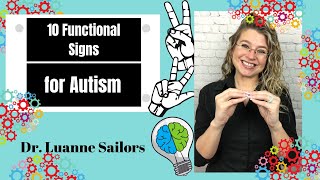
10 Functional Signs for Autism + Non Verbal + Sign Language Basics +Baby Sign Language // SIGN TRIBE

50 Easy Signs for Beginners in British Sign Language (BSL)
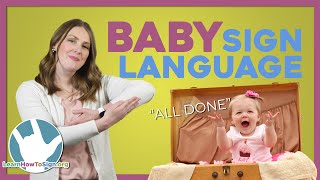
Baby Sign Language | First 12 Baby Signs in ASL | Sign Language for Babies
Safe and Unsafe Situations | Safety Tips for Kids!
Facts about writing and email etiquette for kids
✉️ "Valediction" is the fancy word for a sign-off — it's what you write at the end of a letter or email.
🖊️ Handwritten cards often use warmer, more personal closings than formal emails (think 'With love' vs 'Sincerely').
😊 Using a first name, nickname, or a short friendly phrase can instantly make a closing feel more personal.
🎭 The best sign-off matches the tone and relationship — a playful ending can feel awkward in a serious note.
📚 In British English, 'Yours sincerely' is traditionally used when you know the recipient's name and 'Yours faithfully' when you don't.
How do you practice friendly sign-offs for notes, emails, and cards?
What materials do I need to practice sign-offs with kids?
What ages is this activity suitable for?
What are the benefits of practicing sign-offs with children?
