Sew with a machine
Learn to sew a simple fabric pouch using a sewing machine, practicing threading, straight stitching, and safe machine handling under adult supervision.


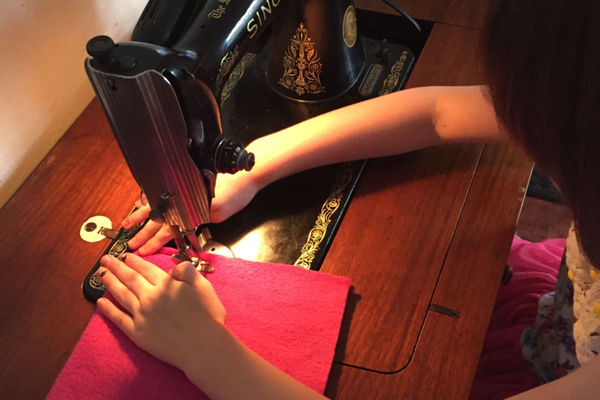

Step-by-step guide to sew a simple fabric pouch with a sewing machine
Learn How to Teach Kids to Use a Sewing Machine: Using the Machine
Step 1
Place the sewing machine on a steady table and sit with an adult nearby so you are ready to learn.
Step 2
Ask the adult to plug in the machine and show you where the power switch is and how to turn it OFF and ON.
Step 3
Make sure the machine power switch is OFF before you touch any parts.
Step 4
Put the thread spool on the spool pin so the thread can feed smoothly.
Step 5
Wind a bobbin on the bobbin winder with the adult's help until it is full.
Step 6
Insert the wound bobbin into the machine's bobbin case following the machine's guide.
Step 7
Lift the presser foot so the machine can be threaded easily.
Step 8
Follow your machine's thread guides and thread the top thread through the needle eye.
Step 9
Turn the hand wheel until the needle catches the bobbin thread and pull both threads under the presser foot.
Step 10
Select a straight stitch and set a medium stitch length on the machine so your seams are even.
Step 11
Practice sewing by placing a scrap fabric under the needle lowering the presser foot and gently pressing the foot pedal to sew a short straight line.
Step 12
Measure and cut two fabric rectangles about 8 by 6 inches place them right sides together and pin or clip three sides leaving the top open.
Step 13
Lower the presser foot sew the two pinned sides with a straight stitch backstitch at the start and end trim the corners turn the pouch right side out press the seams flat with an iron and share your finished fabric pouch on DIY.org.
Help!?
What can we use if the machine's bobbin winder or spare bobbins are missing?
Use pre-wound bobbins that match your sewing machine and then follow the instruction to insert the wound bobbin into the machine's bobbin case instead of winding one on the bobbin winder.
The needle won't catch the bobbin thread when I turn the hand wheel — what should I check?
Make sure the presser foot is lifted, the top thread is correctly threaded through all the machine's thread guides and the needle eye, and then slowly turn the hand wheel until the needle catches the bobbin thread as described in the steps.
How should I adapt this activity for different ages?
For younger children let them sit with an adult and practice safer, low-risk steps like placing the thread spool and pinning the two 8×6 inch fabric rectangles while older children can operate the foot pedal, sew the pinned sides with a straight stitch and backstitch, trim the corners, and press the seams with an iron.
How can we extend or personalize the finished fabric pouch?
Before sewing the three sides add a zipper or pocket, or after turning the pouch right side out press the seams flat with an iron and topstitch around the edges or sew on appliqués for a personalized finish to share on DIY.org.
Watch videos on how to sew a simple fabric pouch with a sewing machine
Sewing Safety Tips
4 Videos

Sewing Safety Tips
How to Use a Sewing Machine for BEGINNERS!
Teaching Kids to Sew- Tips & Ideas
How to Sew, Kids! My first sewing machine by Debbie Shore
Facts about sewing for kids
🧵 Home sewing machines can stitch hundreds of stitches per minute — many do about 600–1,500 stitches/minute!
🪡 Sewing is ancient: archaeologists have found bone sewing needles that are roughly 40,000 years old.
🏭 Isaac Merritt Singer didn’t invent the first sewing machine, but his improvements and company helped make them common in homes.
🧶 Most sewing thread today is made from cotton or polyester (sometimes a cotton-wrapped polyester core for strength).
🔒 Safety first: using the presser foot, keeping fingers away from the needle, and unplugging before changing parts helps prevent accidents.
How do I teach my child to sew a simple fabric pouch on a sewing machine?
What materials do I need to sew a simple fabric pouch with a sewing machine?
What ages is learning to sew a simple fabric pouch suitable for?
What are the benefits and safety tips for kids learning to sew on a machine?
