Do a full turn on a beam
Learn to perform a full turn on a balance beam with step by step guidance, safety tips, and drills to build balance and control.


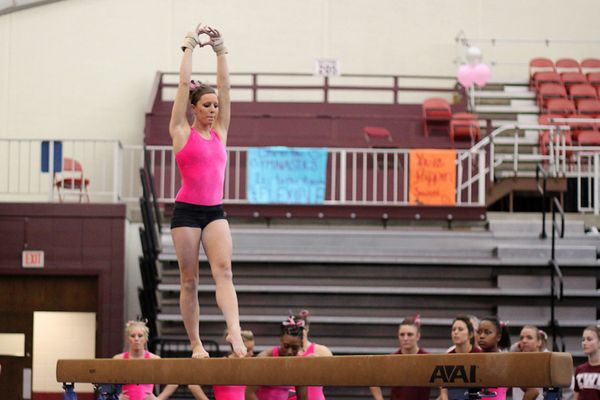
Step-by-step guide to perform a full turn on a balance beam
Today's Gymnastics Tutorial is how to do a Full Turn on the Balance Beam #gymnast #gymnasticsfun
Step 1
Put on comfortable clothes.
Step 2
Put on non-slip socks or go barefoot.
Step 3
Ask an adult to place a mat beside the beam.
Step 4
Ask the adult to stand nearby to spot you when you practice.
Step 5
Warm up by marching on the spot for one minute.
Step 6
Step onto the beam and stand with knees soft and arms out to find your balance.
Step 7
Look at a fixed spot on the wall and hold your gaze for five seconds while standing on the beam.
Step 8
Rise up onto your toes (relevé) on the beam and hold for three counts to feel centered.
Step 9
Practice a 90-degree quarter turn on the beam five times, stopping to balance after each turn.
Step 10
Practice a 180-degree half turn on the beam five times, stopping to balance after each turn.
Step 11
Attempt one full 360-degree turn on the beam while the adult spots you.
Step 12
Share your finished creation on DIY.org
Help!?
What can we use if we don't have a balance beam, non-slip socks, or a mat?
If you don't have a balance beam use a 2x4 laid flat or a strip of tape on the floor as a low beam, go barefoot instead of non-slip socks, and substitute a towel or yoga mat for the mat while still asking an adult to spot you.
I'm losing my balance when I try the full 360-degree turn — what should I do?
If you lose balance during the 360-degree turn, repeat the quarter and half turn practice steps, keep knees soft with arms out, fix your gaze on a wall spot as instructed, rise onto your toes for the relevé holds, and have the adult spot you closely while practicing.
How can I change this activity for younger or older kids?
For younger children lower the beam or use floor tape and focus on walking and quarter turns with the adult nearby and mat in place, while older kids can increase repetitions, practice multiple 180° and 360° turns, hold longer relevés, and work on a polished routine.
How can we make this activity more fun or challenging after we've finished?
Make it more fun by adding music, decorating the beam or tape, timing and counting longer relevé holds, creating a short routine that combines quarter, half, and full turns, recording the routine, and sharing the finished creation on DIY.org.
Watch videos on how to perform a full turn on a balance beam
Gymnastics Tutorial: Full Turn on Balance Beam
4 Videos
Gymnastics Tutorial: Full Turn on Balance Beam

Gymnastics for Children - Balance Beam Drills - Coach Amy Eggleston
How to do BEAM BASICS! by MGA Gymnastics
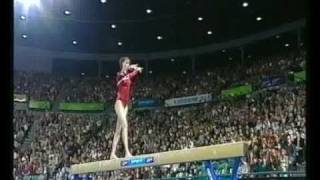
Balance Beam Gymnastics Turns Guide
Facts about balance beam gymnastics for kids
🤸♀️ The balance beam is 5 metres long, 10 centimetres wide, and usually set 125 cm above the floor — tiny width for big moves!
🔄 A "full turn" is a 360° rotation on one foot — doing it on a 10 cm beam takes super balance and control.
🧠 Turns challenge your vestibular system and core, so practicing them boosts balance, coordination, and spatial awareness.
🪜 Beginners often learn turns on a low beam or a beam on the floor first to practice technique without the height scare.
🥇 Famous gymnasts like Nadia Comăneci and Simone Biles made beam skills iconic — beam routines can help win Olympic medals.
How do I teach my child to do a full turn on a balance beam step by step?
What materials and equipment do I need to practice full turns on a balance beam?
What ages is learning a full turn on a balance beam appropriate for?
What safety tips and drills help kids build balance and control for a full turn on a beam?
