Learn to knit
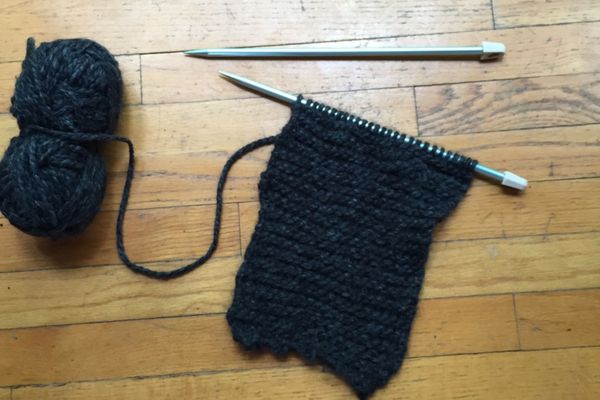
Learn basic knitting by making a simple scarf using chunky yarn and large needles, practicing casting on, the knit stitch, and binding off.
About this activity
Learn basic knitting by making a simple scarf using chunky yarn and large needles, practicing casting on, the knit stitch, and binding off.
What you need
Step by step
- 1
Step 1
Gather the materials listed.
- 2
Step 2
Make a slipknot with the yarn and place it on one knitting needle.
- 3
Step 3
Cast on 20 stitches using the long tail cast-on method.
- 4
Step 4
Hold the needle with the cast-on stitches in your left hand and the empty needle in your right hand.
- 5
Step 5
Make the first knit stitch by inserting the right needle through the front of the first stitch on the left needle then wrap the working yarn around the right needle and pull a new loop through and slip the old stitch off.
- 6
Step 6
Repeat the knit stitch across the row until all stitches are on the right needle.
- 7
Step 7
Turn your work so the needle with the stitches is in your left hand and the empty needle is in your right hand.
- 8
Step 8
Knit every row the same way to make garter stitch fabric by repeating Steps 5 and 6.
- 9
Step 9
Keep knitting rows until the scarf measures about 24 inches 60 cm or reaches the length you want.
- 10
Step 10
Bind off by knitting two stitches then lifting the first knitted stitch over the second and continuing this until one stitch remains.
- 11
Step 11
Cut the yarn leaving a 6 inch 15 cm tail.
- 12
Step 12
Pull the tail through the final loop to secure the end.
- 13
Step 13
Thread the tail into a tapestry needle and weave the loose ends into the edges of the scarf to hide and secure them.
- 14
Step 14
Take a picture and share your finished scarf on DIY.org
Fun facts
How do I teach my child to knit a simple scarf?
Start by teaching a simple cast-on, then practice the knit stitch to create garter stitch rows. Use chunky yarn and large needles so stitches are easy to see. Keep tension loose, work even rows until the scarf reaches the desired length, then demonstrate binding off and weaving in ends with a tapestry needle. Encourage short practice sessions, praise mistakes as learning moments, and sit beside your child to guide hand placement.
What materials do I need to teach knitting to a child?
You’ll need bulky or super-bulky yarn (weight 5–6), a pair of large straight or circular needles (about 8–10 mm / US 11–15), a tapestry needle for weaving ends, scissors, and a measuring tape. Optional items include stitch markers, a row counter, and a small project bag. Choose smooth, light-colored yarn so stitches show clearly and avoid very slippery fibers for beginners.
What ages is learning to knit suitable for?
Most children can start learning basic knitting around ages five to seven with adult help if they have enough fine-motor control and patience. Ages eight to ten often manage more independently and can complete a full scarf. Tailor expectations with shorter sessions, lots of praise, and parental supervision for younger kids. Every child is different; try a short lesson and adjust based on focus and interest.
What are the benefits and safety tips for kids learning to knit?
Knitting builds fine motor skills, concentration, counting, and creativity. Safety tips: use blunt, large needles, supervise young children, keep long hair and loose clothing tied back, and avoid small accessories that could be swallowed. Encourage regular breaks to prevent fatigue. Simple variations—color stripes, fringe, or alternating garter and purl rows—keep practice fun as their confidence grows.
Watch & Learn
Need help?
What can we use if we don't have knitting needles, tapestry needle, or the yarn called for?
Use two smooth pencils or blunt chopsticks as temporary knitting needles, a blunt sewing needle or small crochet hook instead of the tapestry needle for Step 12, and any medium-weight (worsted) yarn for the long-tail cast-on of 20 stitches in Step 3.
My stitches keep slipping off or the long-tail cast-on tail wasn't long enough — how can I fix that?
If stitches slip off during Steps 3–6, stop and put a stitch marker or rubber band on the needle tip to hold them, and if the tail in Step 3 is too short, restart with a longer tail or use a simple backward loop cast-on to reach 20 stitches.
How can I change the activity for younger kids or make it more challenging for older kids?
For younger children cast on 8–12 stitches and use chunky yarn with large needles so each knit stitch in Steps 5–6 is easier, while older kids can cast on 30–40 stitches and knit more rows in Step 8 for a wider, longer scarf.
What are simple ways to personalize or extend the scarf once we've followed the pattern?
Personalize the scarf by switching yarn colors every few rows during Step 6 to make stripes, add fringe after binding off in Step 11 using extra 6-inch tails from Step 10, or attach a pom-pom and sew it on after weaving ends in Step 12.