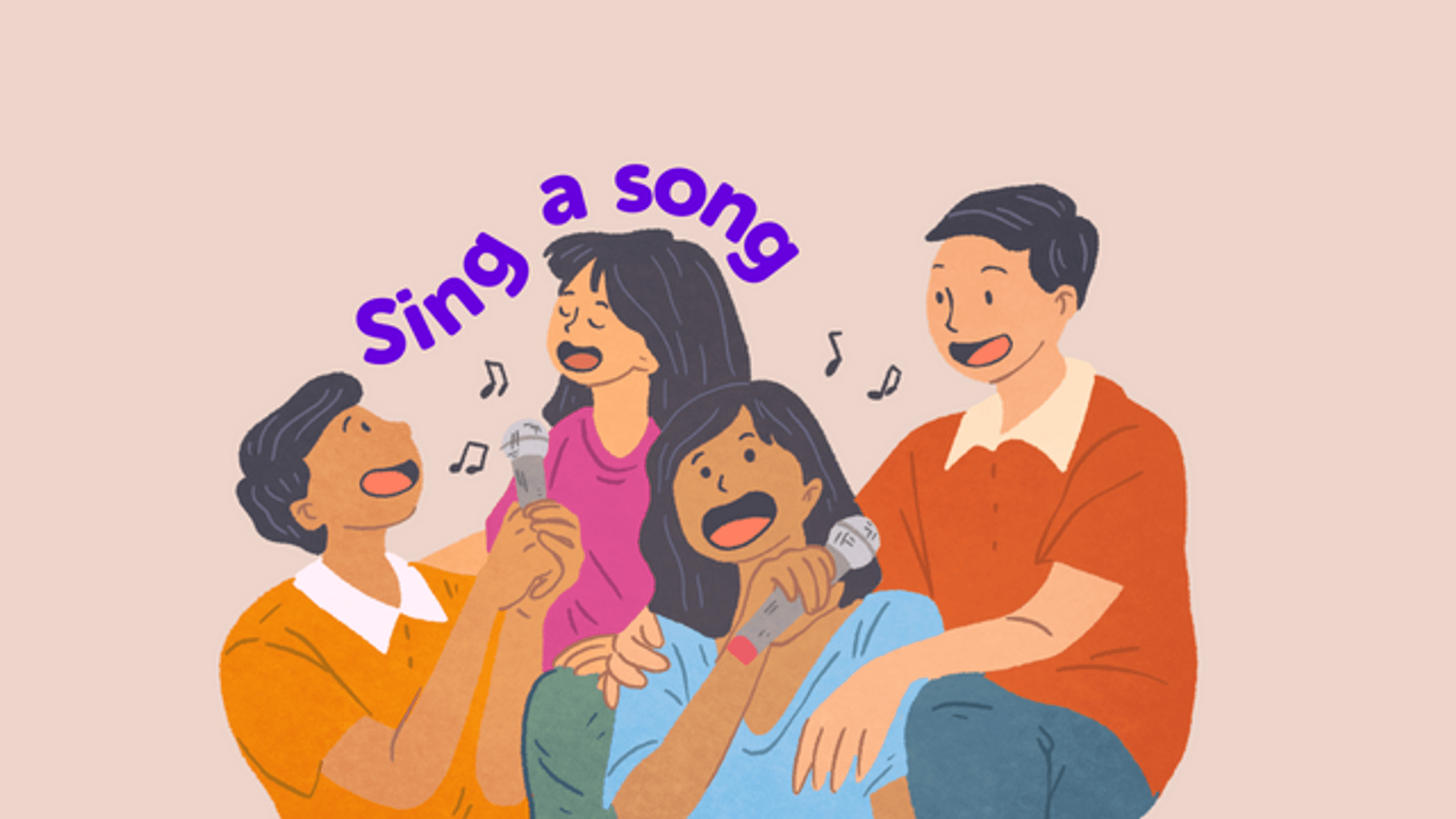
Sing a song
Learn and practice singing a short song, add simple actions and rhythm, then perform it confidently for family or friends.


Step-by-step guide to sing a short song
How to Create a Song From Scratch | Song Writing Made Easy | Fun Activities For Kids
Step 1
Pick a short song to learn or write a tiny 4-line song on your paper.
Step 2
Read the words aloud slowly so you know how each line sounds.
Step 3
Tap a steady beat with your hand or your percussion item for each line.
Step 4
Choose one simple movement for each line like clap jump or point.
Step 5
Practice singing the first line while doing its movement slowly.
Step 6
Add your percussion beat while singing the second line and do its movement.
Step 7
Sing the whole song with all movements and the beat very slowly once.
Step 8
Sing the whole song at a normal performance speed three times to build confidence.
Step 9
Perform your song confidently for a family member or a friend.
Step 10
Share your finished performance on DIY.org
Help!?
What can we use if we don't have a percussion item or paper for the song?
If you don't have a percussion item, use clapping, a wooden spoon on a table, a pot, or a homemade shaker, and if you don't have paper write your 4-line song in a phone note while you follow step 3's 'tap a steady beat'.
I'm having trouble keeping the beat while singing — how can we fix that?
Slow everything down and follow steps 5–7: practice the first line with its movement (step 5), add the percussion on the second line (step 6), then sing the whole song very slowly once (step 7) while counting the beat aloud or using a phone metronome to build coordination.
How can we adapt the activity for different ages?
For preschoolers use a 2-line song and only simple gestures in step 4 with extra slow practice in step 5, while older kids can create more complex movements, add layered percussion in step 6, and run the three normal-speed performances in step 8 to refine their routine.
How can we enhance or personalize our performance before sharing it?
Personalize by writing unique lyrics on your paper, adding simple costumes or a prop that matches each movement from step 4, recording and lightly editing the performance, and then sharing the polished result on DIY.org as directed in the final step.
Watch videos on how to sing a short song
Baby Learning Songs | 15 Minutes of Educational Music for Babies | The Kiboomers
4 Videos
Baby Learning Songs | 15 Minutes of Educational Music for Babies | The Kiboomers
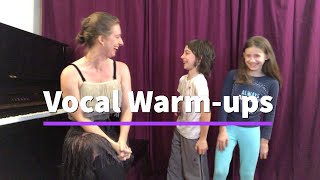
Vocal Warm-ups - Singing Classes for KIDS!
Best Learning Songs Collection | Preschool Prep Company
The Adventure of the Little Train: Uphill, Top Speed, Downhill: Preschool Learning Songs
Facts about singing and performance for kids
🎤 Singing releases endorphins and can make you feel happier and less stressed after just one song.
🫁 Good singing relies on diaphragm breath control — not just the throat — for stronger, steadier notes.
🧠 Kids often memorize melodies and lyrics quickly; repeating a short song a few times builds musical memory fast.
🤸♀️ Adding simple actions (claps, steps, gestures) helps children learn rhythm and improves coordination.
👨👩👧👦 Performing a short song for family or friends boosts confidence and makes future performances feel easier.
How do I teach my child to learn and practice a short song with actions and rhythm?
What materials do I need to help my child learn and perform a short song with simple actions?
What ages is singing a short song with actions and rhythm suitable for?
What are the benefits of teaching my child to sing and perform a short song, and are there safety tips?
