Make words with LEGO® bricks
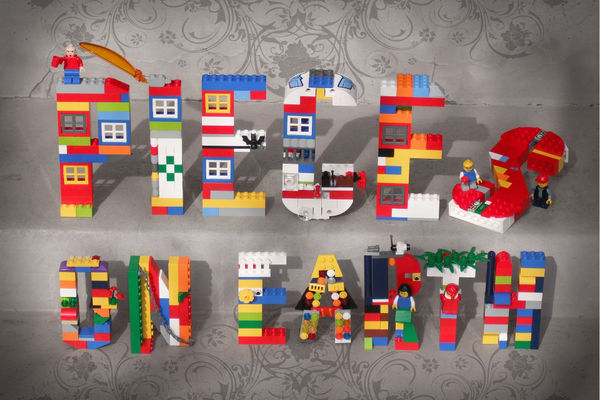
Build letters and short words using LEGO bricks to practice spelling, fine motor skills, creativity, and design while experimenting with color and structure.
About this activity
Build letters and short words using LEGO bricks to practice spelling, fine motor skills, creativity, and design while experimenting with color and structure.
What you need
Step by step
- 1
Step 1
Gather all your LEGO bricks on the baseplate or flat surface so they are easy to reach and see
- 2
Step 2
Pick a short word to build like CAT DOG or SUN so you can practice spelling and design
- 3
Step 3
Draw simple block letter outlines for each letter of your word on the paper to plan shapes
- 4
Step 4
Choose a color for each letter and place matching bricks in small piles so colors are ready
- 5
Step 5
Build the first letter on the baseplate by stacking and placing bricks to match your sketch
- 6
Step 6
Build each remaining letter one at a time using the same method so the word forms across the baseplate
- 7
Step 7
Gently nudge each letter to check if any letters wobble or fall over
- 8
Step 8
Add extra bricks to any wobbly letters to make them stronger and more stable
- 9
Step 9
Try rebuilding the word with a new color pattern or by making letters taller to experiment with design
- 10
Step 10
Take a photo of your finished LEGO word and share your creation on DIY.org
Fun facts
How do you make words with LEGO® bricks?
To make words with LEGO® bricks, start by choosing a short word or a child's name. Use a baseplate or flat surface and plan each letter with simple block shapes—stack 1x1 or 1x2 bricks or use plates to create straight lines and gentle curves. Sort bricks by color and size, build letters one at a time, arrange them left-to-right, and read the word aloud. Begin with two- or three-letter words and progress to longer words or decorated letters for creativity.
What materials do I need for a LEGO® word-building activity?
You’ll need a collection of LEGO® bricks (various 1x1, 1x2, 1x4 bricks, plates, and tiles) and at least one baseplate to anchor letters. Include flat tiles for smooth letter faces, multiple colors for patterning, sorting trays or bowls, a printed alphabet or letter template for reference, paper and pencil to list target words, and optional tweezers for fine-motor practice. A small, clean workspace and a timer make game variations easier to manage.
What ages is this LEGO® activity suitable for?
Suitable ages depend on fine motor skills and supervision. Preschoolers (3–5) can do simple, supervised stacking of larger bricks to learn letter shapes. Early elementary kids (5–8) can build block letters and three-letter words to practice spelling. Older children (9+) can design stylized letters, longer words, and planning challenges. Avoid loose small pieces for under-3s due to choking hazards; always supervise younger children and tailor complexity to each child’s skill and attention.
What are the benefits of building words with LEGO® bricks?
Building words with LEGO® bricks boosts spelling and phonics by making letters tactile and visual. It strengthens fine motor skills, spatial reasoning, color recognition, problem solving, and planning. Collaborative builds encourage language, communication, and confidence when children read their creations aloud. The screen-free, hands-on approach supports multi-sensory learners and links early literacy with STEM thinking through design, pattern exploration, and playful experimentation.
Watch & Learn
Need help?
What can we use if we don't have a LEGO baseplate or enough matching-color bricks?
Use a piece of cardboard, a baking sheet, or a large hardcover book as a flat 'baseplate' and substitute similar-sized toy bricks or colored paper stacks for missing matching bricks so you can still 'Gather all your LEGO bricks on the baseplate or flat surface' and 'Choose a color for each letter'.
My letters keep falling over—what should we try?
If letters wobble when you 'gently nudge each letter to check if any letters wobble or fall over', reinforce them by widening the bottom with extra bricks, overlapping layers for tighter connection, or placing a flat plate under the letter and then 'Add extra bricks to any wobbly letters' for stability.
How can I adapt this activity for different ages?
For preschoolers, pick very short words like CAT or SUN, use larger DUPLO or big bricks and pre-draw thick block outlines and pre-sort color piles from 'Choose a color for each letter', while older kids can build longer words, experiment with taller letters and new color patterns as in 'Try rebuilding the word with a new color pattern or by making letters taller'.
How can we make the finished LEGO word more special or displayable?
Attach your letters onto a larger flat plate or a piece of cardboard to make a plaque, add stickers or small LEGO accessories for decoration, and then 'Take a photo of your finished LEGO word and share your creation on DIY.org' to show off your personalized design.