Go light painting
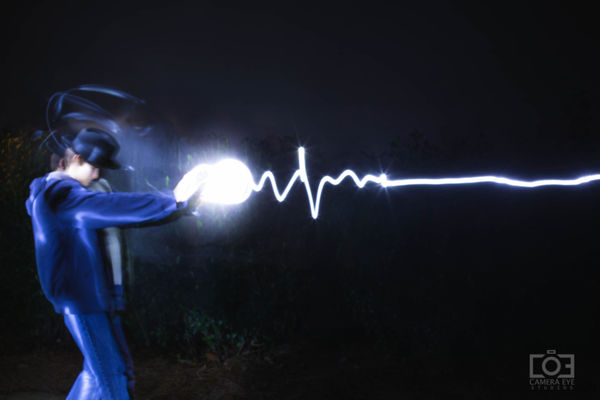
Make colorful light paintings by moving flashlights or glow sticks in front of a smartphone camera on a long-exposure app, experimenting with shapes and motion.
About this activity
Make colorful light paintings by moving flashlights or glow sticks in front of a smartphone camera on a long-exposure app, experimenting with shapes and motion.
What you need
Step by step
- 1
Step 1
Find a dark room and clear a safe open area to move in.
- 2
Step 2
Place the smartphone on the tripod or steady surface aimed at the open area.
- 3
Step 3
Open the long-exposure camera app on the phone.
- 4
Step 4
Set the exposure time to about 8 seconds in the app.
- 5
Step 5
Lock the camera focus and exposure in the app so they do not change during the shot.
- 6
Step 6
Decide whether you will use a 3-second timer or have a helper press the shutter.
- 7
Step 7
Take one quick test shot to check that the phone frame shows the whole area where you will draw.
- 8
Step 8
Press the shutter (or have your helper press it) to start the long exposure.
- 9
Step 9
Step into the frame and move your light slowly to draw big shapes until the exposure ends.
- 10
Step 10
Look at the photo and pick one thing to change next like speed shape or where you stand.
- 11
Step 11
Try new shots with different motions colors or heights of the light to make cool designs.
- 12
Step 12
Share your favorite finished light painting on DIY.org
Fun facts
How do I do light painting with flashlights and a smartphone?
Set up in a dark room or outdoors at night. Mount the smartphone on a tripod or steady surface and open a long‑exposure app or use night mode. Set exposure to 2–15 seconds, lock focus, and start the exposure. Move flashlights or glow sticks in front of the lens to “paint” shapes or trails while keeping the camera still. Review the photo and experiment with speed, height, and patterns to create different effects.
What materials do I need for light painting with glow sticks?
You’ll need a smartphone with a long‑exposure app or night mode and a tripod or steady surface. Bring flashlights, LED lights, or colored glow sticks plus colored cellophane or gels to change hues. Optional items: a remote shutter or timer, tape to secure gels, spare batteries, and small props for silhouettes. Choose nonhazardous lights and keep tiny parts and batteries away from young children.
What ages is this light painting activity suitable for?
Light painting suits many ages with supervision. Toddlers (3–5) can enjoy waving glow sticks while an adult handles the phone; preschoolers need close supervision. Ages 6–8 can try simple shapes with help. Kids 9+ can plan designs and operate the camera with guidance. Always supervise near tripods, watch for small parts or batteries, and adapt expectations to each child’s coordination and attention span.
What safety tips and creative variations can we try for light painting?
Safety first: use battery‑powered lights, check batteries, and work on flat ground to avoid trips. Wear reflective clothing if near roads, and avoid laser pointers. For variations, change exposure times, layer colors with gels, spin LED wands, create silhouettes with a backlit subject, or use fast gestures for dotted effects. Review photos together to tweak techniques and encourage creative experimentation.
Watch & Learn
Need help?
What can we use if we don't have a tripod or a long-exposure camera app?
If you don't have a tripod, tape the smartphone to a stack of heavy books or a steady surface aimed at the open area and use a free long-exposure app (e.g., Slow Shutter Cam or Open Camera) or your phone's Night/Pro mode to set an 8-second exposure.
My light painting is blurry or too bright—what should I check?
Do the quick test shot again, make sure the phone is perfectly still on the tripod/steady surface, lock the camera focus and exposure in the app, and if it's too bright shorten the 8-second exposure or dim/move the light faster.
How can we change the activity for different ages?
For younger kids have an adult press the shutter, use glow sticks and a shorter 2–4 second exposure for big simple shapes, while older kids can work solo with 8–15 second exposures, multiple colored LEDs, and more complex motions or choreography.
How can we make the light paintings more interesting or personal?
Try different light sources (flashlights with colored tape, glow sticks, LED wands), change the light height and speed to make layers, combine multiple exposures in a photo editor, add costumes or props, and then share your favorite on DIY.org.