Build a rail system in minecraft
Design and build a Minecraft rail system with tracks, powered rails, stations, and minecarts; test routes, adjust slopes, and improve efficiency.
About this tutorial
Design and build a Minecraft rail system with tracks, powered rails, stations, and minecarts; test routes, adjust slopes, and improve efficiency.
What you need
Step by step
- 1
Step 1
Open Minecraft and load the world where you want to build your rail system.
- 2
Step 2
Pick a start point and place a tall block marker so you remember where the line begins.
- 3
Step 3
Pick an end point and place a tall block marker so you remember where the line ends.
- 4
Step 4
Walk from the start marker to the end marker to choose the exact route you want the rails to follow.
- 5
Step 5
Mark the chosen route by placing temporary blocks every few steps so you can see it clearly.
- 6
Step 6
Clear obstacles along the marked route by removing trees and blocks that are in the way.
- 7
Step 7
Lay regular rails along flat, cleared sections by placing rails one after another on the ground.
- 8
Step 8
Place powered rails on slopes and spaced across flat sections (try starting with one every 8–12 blocks) to help the cart keep speed.
- 9
Step 9
Power the powered rails by placing redstone torches or levers next to them and connect with redstone dust as needed.
- 10
Step 10
Build a simple station platform at the start and at the end by placing building blocks beside the track.
- 11
Step 11
Add a sign with the station name and a button or pressure plate to the platform so riders can stop or start the cart.
- 12
Step 12
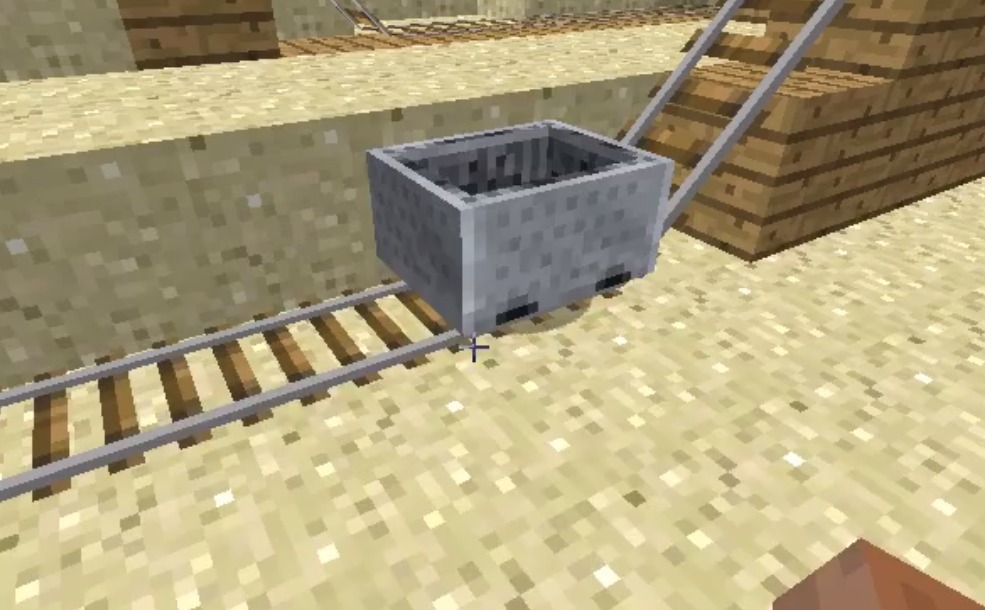
Put a minecart on the track and test the route by riding in it or pushing it along the line.
- 13
Step 13
Watch where the minecart slows or gets stuck and adjust by adding more powered rails or smoothing steep slopes.
- 14
Step 14
Add fences and torches along your line to keep it safe and visible at night.
- 15
Step 15
Take screenshots or a short video and share your finished rail system on DIY.org.
Fun facts
How do you build a Minecraft rail system?
Start by planning routes on a map or in creative mode. Lay basic rails for flat sections and use powered rails every 8–12 blocks (more if uphill). Place redstone torches, blocks, or levers to power powered rails. Build stations with platforms and stopping rails (detector/activator rails) and connect storage like chests and hoppers. Test minecart runs, fix steep slopes, add switches for branches, and iterate to improve speed and reliability.
What materials do I need for a Minecraft rail system?
In-game you'll need rails, powered rails, redstone dust, redstone torches or blocks, minecarts, detector/activator rails, building blocks for stations, slabs or stairs for smooth slopes, hoppers and chests for cargo, and optional redstone repeaters for timing. In real life, bring a pencil and paper to sketch routes or use a creative world to prototype. Adult help may be useful for resource-heavy survival builds.
What ages is building a Minecraft rail system suitable for?
This activity suits kids about 6+ with adult guidance for basic builds; ages 8–12 can handle planning, powered rails, and station design with occasional help. Teens and older children can design complex automated systems using redstone and hoppers independently. Adjust difficulty by simplifying routes or using creative mode, and supervise younger children to help with crafting recipes and redstone concepts.
What are fun variations and challenges for a Minecraft rail project?
Try building an express line versus a local line, an automated cargo network with hoppers and sorting, or scenic tourist routes with stations and signage. Set challenges: fastest route between two points, resource-efficient survival rails, or a looping roller-coaster-style scenic ride. You can also add puzzles like timed departures with redstone clocks or multi-branch switching systems for more engineering practice and teamwork.
Watch & Learn
Need help?
What can I use instead of powered rails or redstone torches if they’re hard to craft or find?
If you don't have powered rails or redstone torches, use a furnace minecart to push the cart during the 'test the route' step or manually push the minecart along the laid rails.
My minecart keeps stopping — what should I check and fix first?
If the minecart slows or gets stuck during 'test the route', add powered rails at problem spots, place nearby redstone torches or levers to power them, and smooth steep slopes as suggested in the 'Watch where the minecart slows' step.
How can I adapt this rail-building activity for different ages?
For younger kids use Creative mode and let an adult place 'temporary blocks' and 'clear obstacles' while older kids can add redstone circuitry like powered-rail timing and 'button or pressure plate' station automation.
What are simple ways to extend or personalize the rail system after it works?
Personalize and enhance the system by building themed 'station platforms' with signs, adding fences and torches along the line for visibility, creating branching routes with switches, and recording a short video to share on DIY.org.